
Home / Ingredients / L-isoleucine
Ingredients Library
It is important to ensure the feed includes a variety of materials to encourage appetite, maintain good gut flow, promote intestinal fermentation and bioavailability of all macro- and micro-nutrients.
TWYDIL® has studied the nutritional integration of:
load more
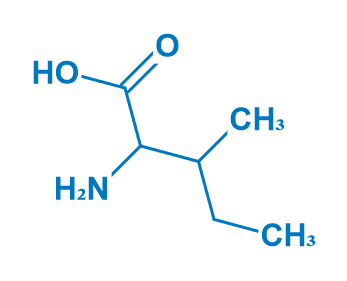
L-isoleucine
Branched amino acids and their roles:
- Source of energy
- Help many cell functions
- Anti-fatigue
- Support physical activity
Branched amino acids and their sources:
- Whey protein
- Maize
Branched amino acids can be used as energy sources by complex organisms. This is limited in equine metabolism because it is linked to a more complex mechanism. Indeed, during long and average distance efforts, fatigue appears when the glycogen reserves are empty. But whenever this glycogen drop is associated with a decrease of the ratio branched amino acids/L-tryptophan, fatigue occurs sooner. That is why it seems worthwhile to supplement horses with branched amino acids.
Valine has a specific role in DNA production and is essential for cell development.
If we consider the needs of leucine, isoleucine and valine together, they are estimated at 1.6 g/kg of metabolic weight per day.
The metabolic weight corresponds to the horse weight to the power 0.75: for example a horse of 450 kg : 450 0.75 = 98 kg of metabolic weight; its needs will be 156 g of these 3 branched amino acids per day. A normal ration usually contains a sufficient quantity of these amino acids, except if a horse suffers from a muscular problem or during an endurance effort.
Products containing L-isoleucine

TWYDIL® PMC
Complementary feed for a solid musculoskeletal system.

TWYDIL® PROTECT PLUS
Supplementation for a supple and tonic effort.