


Home / Ingredients / Vitamin C
It is important to ensure the feed includes a variety of materials to encourage appetite, maintain good gut flow, promote intestinal fermentation and bioavailability of all macro- and micro-nutrients.
TWYDIL® has studied the nutritional integration of:
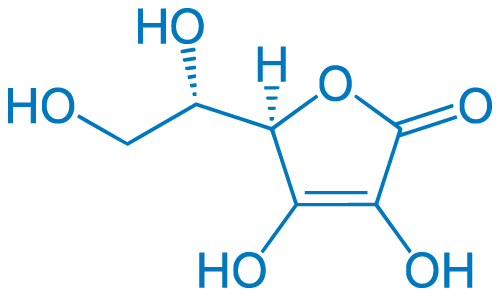
Vitamin C (or ascorbic acid) and its roles:
The stability of ascorbic acid is very poor in humid conditions; it is important to understand how to stabilise it.
Vitamin C is not a true vitamin for horses at rest, because they produce enough of it to cover the needs. But when they are in training or stressed they are unable to produce sufficient for their needs.
Depending on the age and physiological status of the horse, the needs vary from 0 to 2 g of ascorbic acid per day.
During a period of high stress, 20 g/day are necessary.
Ideal daily supplementation for weak or aged horses, very concentrated in vitamins, trace minerals, amino acids, magnesium, prebiotics and probiotics.
To help manage excitability and stress, and to improve digestive and muscular well-being of the horse.
An ideal daily supplement rich in vitamins, trace elements, amino acids and magnesium.
Supplementation to keep a horse fit and healthy.
Daily supplement highly concentrated in vitamins, trace elements, amino acids, magnesium, prebiotics and probiotics for growing horses.
Complementary feed for horses undergoing stress. TWYDIL® HIPPACAN+C is an adaptogen, that means a natural substance which enhances and reinforces adaptation.
Supports respiratory balance and sustained performance.
Supplementation for a supple and tonic effort.
An ideal daily supplement rich in vitamins, trace elements, amino acids and magnesium.
A complementary feed rich in vitamins, trace elements, lysine, magnesium, prebiotics and beta-carotene for broodmares and stallions.
Contributes to maintaining normal fertility and supports lactation through a balanced supply of essential micronutrients.
Supplementation to maintain the respiratory system during performances.
Supplementation that gives additional energy, booster effect.