


Home / Ingredients / Vitamin B1
It is important to ensure the feed includes a variety of materials to encourage appetite, maintain good gut flow, promote intestinal fermentation and bioavailability of all macro- and micro-nutrients.
TWYDIL® has studied the nutritional integration of:
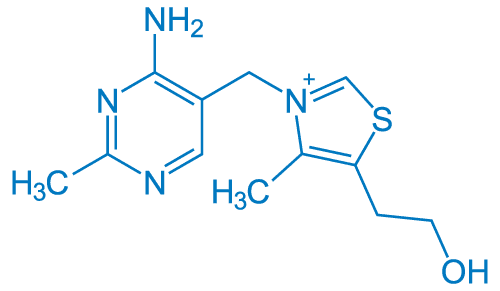
Vitamin B1 (or thiamine) and its roles:
Vitamin B1 and its main sources:
Thiamine is a relatively unstable vitamin during the production process; an overdosage must be applied before production.
Its role as coenzyme for nearly 12 carboxylases explains its metabolic effects.
Depending on the age and physiological status of the horse, the needs vary from 10 to 100 mg of thiamine per day.
Ideal daily supplementation for weak or aged horses, very concentrated in vitamins, trace minerals, amino acids, magnesium, prebiotics and probiotics.
To help manage excitability and stress, and to improve digestive and muscular well-being of the horse.
An ideal daily supplement rich in vitamins, trace elements, amino acids and magnesium.
Supplementation to keep a horse fit and healthy.
Daily supplement highly concentrated in vitamins, trace elements, amino acids, magnesium, prebiotics and probiotics for growing horses.
Oral solution to energise, galvanise before exercise and fortify the organism.
Supplementation for a supple and tonic effort.
An ideal daily supplement rich in vitamins, trace elements, amino acids and magnesium.
A complementary feed rich in vitamins, trace elements, lysine, magnesium, prebiotics and beta-carotene for broodmares and stallions.
Contributes to maintaining normal fertility and supports lactation through a balanced supply of essential micronutrients.
Supplementation that gives additional energy, booster effect.