


Home / Ingredients / Biotin
It is important to ensure the feed includes a variety of materials to encourage appetite, maintain good gut flow, promote intestinal fermentation and bioavailability of all macro- and micro-nutrients.
TWYDIL® has studied the nutritional integration of:
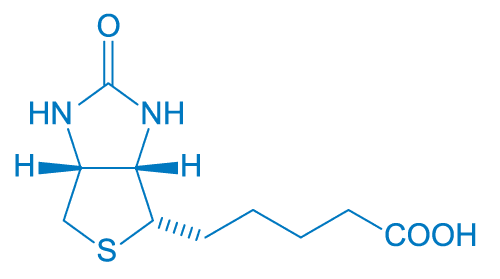
Biotin (vitamin H) and its roles:
Biotin and its sources:
Biotin is a stable water-soluble vitamin largely unaffected by production processes.
Its role is generated by its action as coenzyme for carboxylation. This chemical reaction is important in gluconeogenesis and also protein synthesis, particularly the production of “hard” proteins such as keratin. In particular it controls the carboxylation of acetyl co-enzyme A in fatty acid synthesis.
Depending on the physiological status of the horse, the needs vary from 0.3 to 1.8 mg of biotin per day. In case of some poor skin, coat or hoof conditions, up to 15 mg/day may be required for a period of 1 month.
Ideal daily supplementation for weak or aged horses, very concentrated in vitamins, trace minerals, amino acids, magnesium, prebiotics and probiotics.
An ideal daily supplement rich in vitamins, trace elements, amino acids and magnesium.
Daily supplement highly concentrated in vitamins, trace elements, amino acids, magnesium, prebiotics and probiotics for growing horses.
Oral solution to energise, galvanise before exercise and fortify the organism.
Supplementation for a supple and tonic effort.
An ideal daily supplement rich in vitamins, trace elements, amino acids and magnesium.
A complementary feed rich in vitamins, trace elements, lysine, magnesium, prebiotics and beta-carotene for broodmares and stallions.
Contributes to maintaining normal fertility and supports lactation through a balanced supply of essential micronutrients.
Supplementation to maintain the respiratory system during performances.
Supplementation that gives additional energy, booster effect.